Lugosi Law Firm: A Litigation Boutique focusing on criminal law, appeals, public law and Charter litigation.
Notable Achievements
Dr. Lugosi’s notability is not based on his status as a ‘lawyer’ but as a legal catalyst. His career is defined by a rare ‘double impact’ on North American law.
In Canada, his successful appeal in the landmark Supreme Court of Canada in R. v. Feeney fundamentally altered the balance between state power and individual privacy. resulting in the codified ‘Feeney Warrant.’ The Supreme Court of Canada ruled 5–4 that police could not enter a private dwelling to make an arrest without prior judicial authorization. This decision led to Parliament’s amendment of the Criminal Code of Canada, establishing what is now known in Canadian law as a “Feeney Warrant.”
Biographical Summary
Charles Imre Michael-John Lugosi was born in Brantford Ontario Canada and attended North Park Collegiate and Vocational School where he completed 4 years of high school in 3 and graduated as an Ontario Scholar. He attended the University of Western Ontario, where he completed two years of Social Science studies towards his Honors Bachelor of Arts degree, and was named to the Dean’s Honor List for both years. Dr. Lugosi was then admitted to law school at Western at the age of 20, one of the youngest in his class.
Education and Bar Admissions
Dr. Lugosi’s unique credentials authorize him to practice in both the United States and Canada: Admitted to the Law Society of Upper Canada (Ontario) April 9, 1981; Admitted to the Law Society of British Columbia, May 11, 1982; Admitted to Michigan State Bar, May 7, 2007; Admitted to United States District Court, Eastern District Michigan, June 25, 2007; United States District Court, Western District Michigan, August 20, 2009; United States Court of Appeals, Sixth Circuit, August 20, 2009; Supreme Court of the United States, October 4, 2010; United States Court of Appeals, Fourth Circuit, February 6, 2012; and Washington State Bar, September 23, 2013.
Life Member, Million Dollar Advocates’ Forum
Membership is limited to trial lawyers who have demonstrated exceptional skill, experience, and excellence in advocacy by achieving a verdict, award or settlement in the amount of one million dollars or more.
Four Areas of Law
Defense of Constitutional Rights and Freedoms
- Freedoms of speech (expression), thought, conscience, belief, religion
- Defense of life, liberty and security of the person
- Protect against discrimination, seeking equality rights and equal protection under the law
- Protect against human rights violations
- Defend again the power of the state: surveillance, unreasonable search and seizure, arbitrary detention
Public Law: Regulatory law, Professional discipline, Human Rights and Judicial Review
- Medical, dental, and all other health care professionals
- Legal professionals
- Financial services and accounting professionals
- Professors and teachers
- Athletes, both amateur and professional
Appeals and Judicial Review
- Constitutional, Criminal and Civil Appellate Advocacy
- Judicial Review of Administrative Action
- Acting for Intervenors in matters before appellate courts
- Provide strategic advice to litigants to raise issues and arguments to protect appellate rights
- Provide opinions about the merits of a further appeal
- Provide research and writing services to unrepresented litigants or other counsel
- Team with counsel of record to work together as appellate counsel
Criminal Law: Trials and Appeals
- Murder, Attempted Murder, Manslaughter
- Criminal negligence causing death
- Sexual assault and pornography
- White Collar Crimes (like fraud)
- Kidnapping and armed robbery
- Drug trafficking and conspiracy
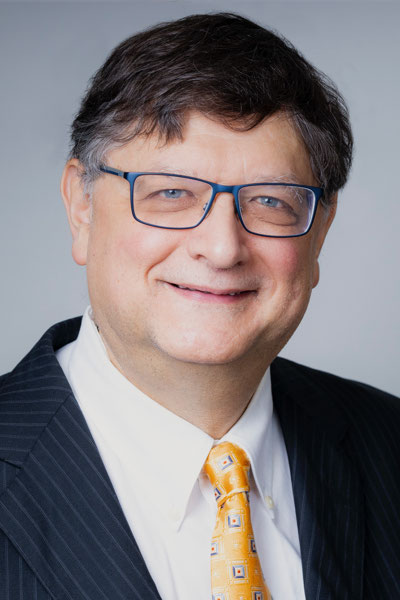
Dr. Charles Lugosi
Dr. Lugosi was first admitted to practice on April 9, 1981, and has been licensed to practice for over 40 years, not just in Ontario, but British Columbia, and in the United States, including the United States Supreme Court. Dr. Lugosi has authored three pro bono Amicus Briefs to the U.S. Supreme Court and significantly contributed to a fourth. He has appeared as lead counsel in several important cases in the Supreme Court of Canada, and won the landmark case of R. v. Feeney, a decision that changed the law to now require the use of a “Feeney warrant” to enter private residences and to make a search.